AI
AI for SharePoint Technical Documents: How AI Is Transforming Document Processing

Head of Product - CPO, AODocs · Oct 17, 2026 · Updated Oct 18, 2026
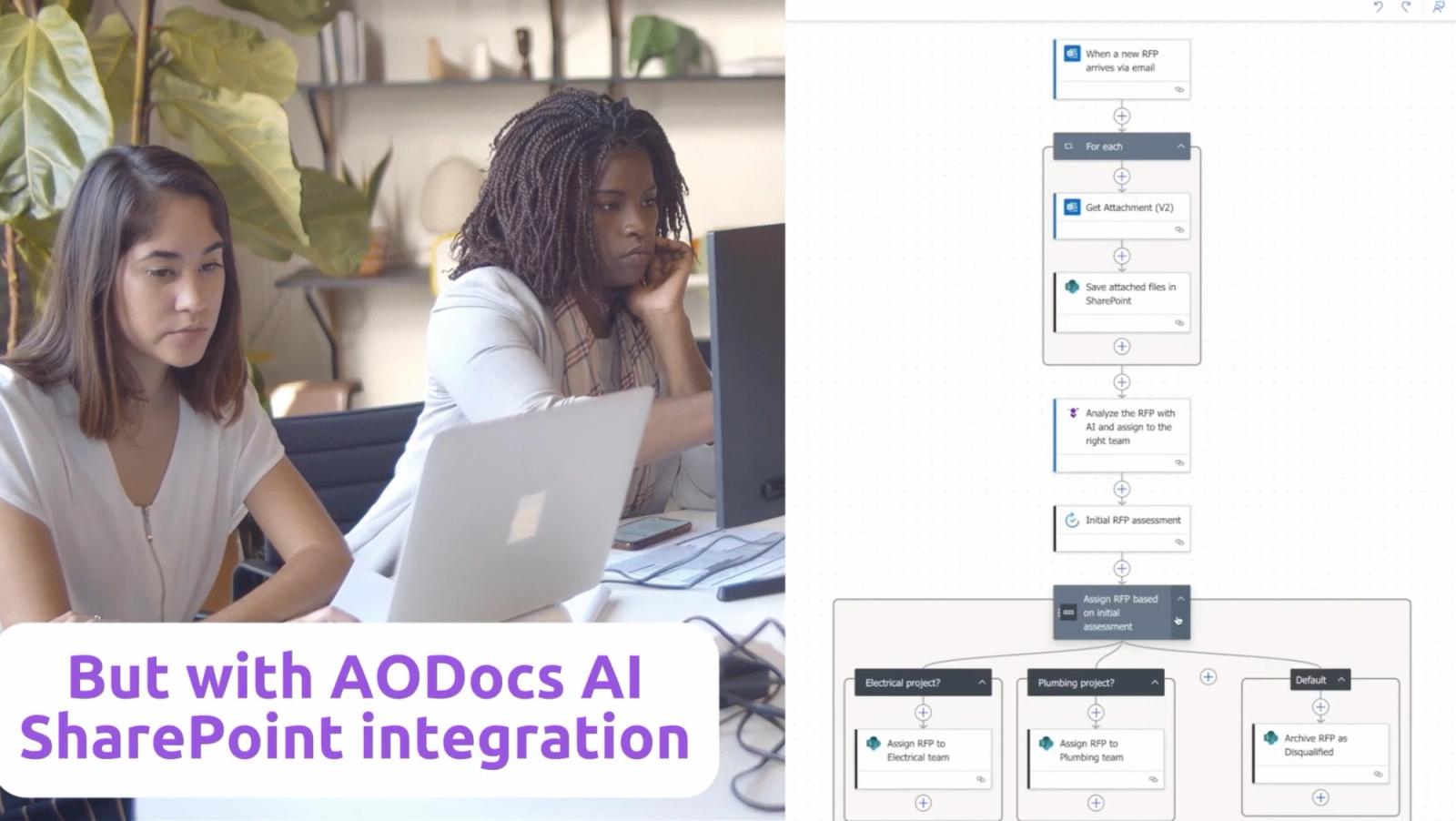
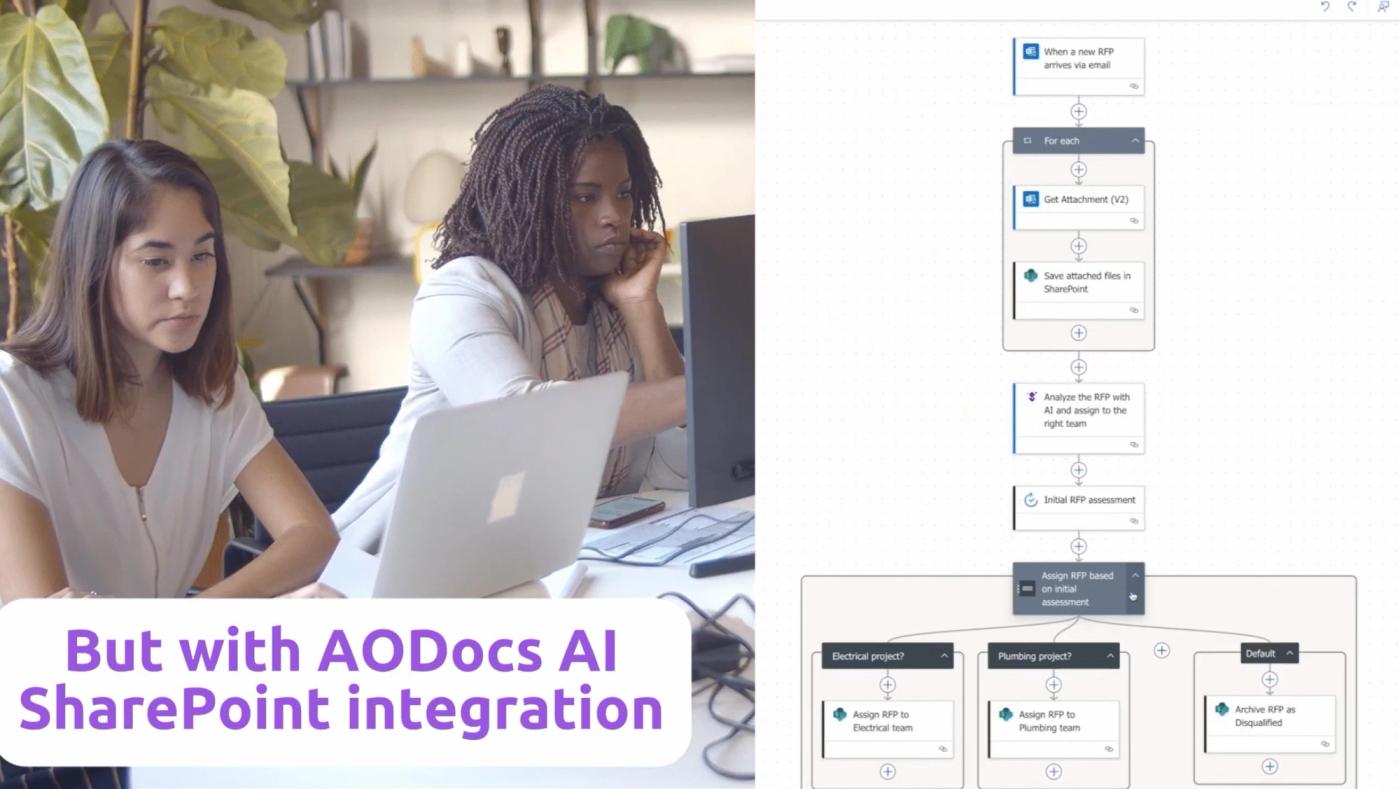
For some organizations, SharePoint still meets many of their document management needs
For teams keeping technical documents in SharePoint, modernization can start with a bounded workflow. AI can assist with classification and field extraction, while configured Power Automate steps route the results. Define what must be checked before those results trigger an action.
Across industries, organizations are rethinking how they manage their documents. Many are reaching an inflection point. Their existing systems (especially on-premise versions of legacy Document Management Systems (DMS)) are struggling to keep up with the demands of the AI era, even as technical, compliance, and operations teams are asked to handle more complex, document-heavy processes inside Microsoft 365.
With that, the question arises: Should I stay or should I go?
Some companies choose to migrate to third-generation AI-enabled DMS platforms, designed from the ground up for intelligent automation, scalability, and compliance. These migrations, when well planned, can unlock major productivity and governance gains across the enterprise.
For other organizations, migration is not an immediate option. They rely on SharePoint for business-critical content and want to expand their AI capabilities without replacing their DMS. The goal is to improve a specific process without disrupting established systems or workflows.
For IT, compliance, and operations teams, AI integration in SharePoint is an option to evaluate. This article focuses on classifying technical files, extracting fields, and routing RFPs. Permissions, review responsibilities, data processing boundaries, and audit evidence still need to be defined for the chosen configuration.
The Hidden Costs of Manual Document Processing Review
Consider a hypothetical engineering firm receiving Requests for Proposals (RFPs). A project manager reviews each file and decides whether the electrical or plumbing team should assess it, or whether it falls outside the firm's scope. An AI-generated summary can help with triage, but the source requirements still need review.
If that manager is unavailable, the document sits idle. If the file is complex, manual review can take hours or even days, while AI can generate smart summaries of long documents in SharePoint to speed up triage for technical teams. Multiply that by dozens of RFPs a week, and the result is a constant drain on time and attention. Beyond inefficiency, these delays can mean missed deadlines and lost business opportunities.
Bringing AI Powered Solutions into the Workflow
A configured Power Automate workflow can call a document processing service and pass its outputs to later steps. The AODocs integration demonstration illustrates this approach. Microsoft AI Builder and AODocs are distinct implementation options; their model setup, licensing, permissions, and data processing arrangements must be evaluated separately.
In an RFP workflow, an AI step can propose a project type and extract fields such as location or budget. Routing rules then use validated values to select a team. Missing or contradictory values should enter an exception queue. Measure processing time on representative files rather than assuming every document can be handled in seconds.
A natural-language interface can help users inspect the results. It does not replace the workflow rules or the review needed before a consequential action.
Smarter Workflows, Tailored to Each Team
AI-driven automation in Microsoft 365 can be even more effective when it reflects the needs of specific teams. Specialized groups (such as legal, finance, or engineering) can configure custom AI steps to extract exactly the information they need from complex files, suggest metadata for documents, and flag inconsistencies relevant to each team.
For example, the electrical team may need specifications from an RFP, while the plumbing team needs site conditions and materials. Define the fields each team needs and test them against labeled examples. Review ambiguous results before routing or making a bid decision.
Where the selected integration supports model choice, assess the model and its processing terms against the information involved. Do not assume that a custom model or a familiar Microsoft 365 interface means every processing step stays within the same data boundary.
Measure processing and review time
Test the complete process, including extraction, validation, exceptions, and reviewer corrections. Compare like-for-like files with the manual baseline. A faster AI response is useful only if the combined workflow meets the team's quality and control requirements.
Integrating with SharePoint Document Libraries and Power Automate
Evaluate AODocs AI integration against the workflow you need to support. Use the demonstration and current product documentation to confirm the available actions, model options, and licensing.
A useful pilot should test the following requirements:
- Call the selected AI analysis step from a configured Power Automate flow.
- Classify documents and route validated results to the correct document library or review queue.
- Map extracted fields to the required metadata columns and validate values before saving them.
- Test invoice fields such as counterparty, amount, and due date, along with any contract fields included in scope.
- Confirm which model options the selected integration supports and which processing terms apply.
- Verify the source references, permissions, workflow events, and exception records available for investigation.
By introducing structured intelligence into existing workflows, organizations can modernize without replacing their DMS, unlocking the benefits of third-generation document management in a familiar environment.
Learn more
Whether your organization is preparing to migrate from a legacy system or enhancing its existing SharePoint environment, the path to intelligent document management starts with AI.
- Dive deeper into AODocs' trusted AI capabilities
- Watch a quick demo to discover AODocs AI integration with Microsoft and Power Automate
Frequently asked questions
Can Power Automate process SharePoint documents without replacing SharePoint?
Yes. A configured Power Automate flow can use an AI Builder document processing model to extract fields and tables, then use those outputs in later actions. Microsoft's documented action requires a trained, published model and supports PDF, JPEG and PNG inputs. Confirm the model, access permissions and applicable licensing for your environment before using extracted data to drive a business workflow.
How should a document workflow handle uncertain AI extraction results?
Route uncertain or incomplete results to a named reviewer before they drive a consequential action. AI Builder exposes confidence scores for extracted fields and table cells; a configured flow can use them in conditions. Choose thresholds using tested examples of your documents, and include missing fields and invalid values. Confidence scores help route review; they do not prove a value is correct.
What should be specified before automating RFP routing in SharePoint?
Specify the fields that determine routing, the permitted destinations and the exceptions requiring review. For example, a hypothetical RFP workflow could extract project type and location, then ask a reviewer to resolve missing or contradictory values. Test against manually labeled RFPs before activation. Keep the routing decision separate from any approval to bid or commitment to a customer.
What should an AI pilot for SharePoint technical documents measure?
Measure extraction quality, processing time, correction effort, and routing exceptions on representative files. Include missing fields, conflicting values, and documents outside the expected scope. Check the permissions and evidence available to ordinary users before allowing extracted results to drive a business action.