




AI is only as powerful as the information it reads. Build it on a trusted document foundation that removes ambiguity, reduces hallucination, and ensures reliable outcomes.
Enterprise repositories are different as they contain:
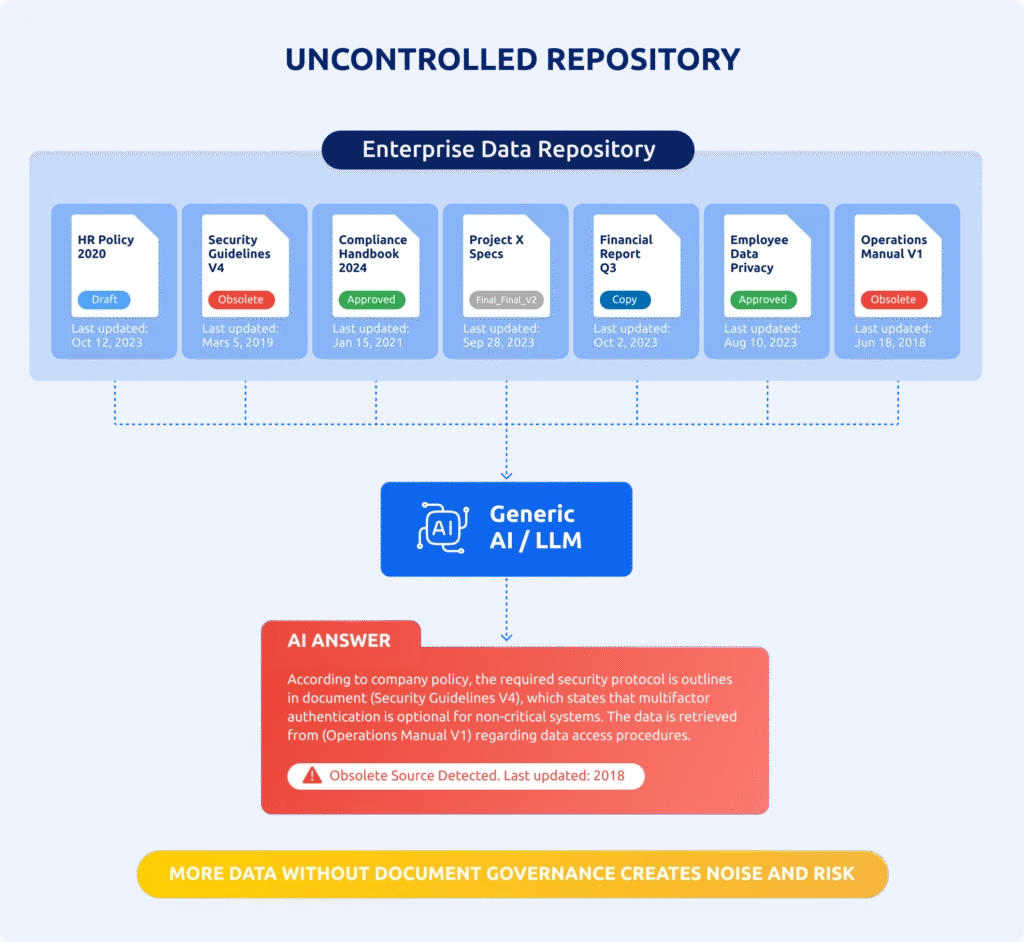
Duplicates and conflicting versions
Drafts mixed with obsolete content
Missing or inconsistent metadata
Complex permission boundaries
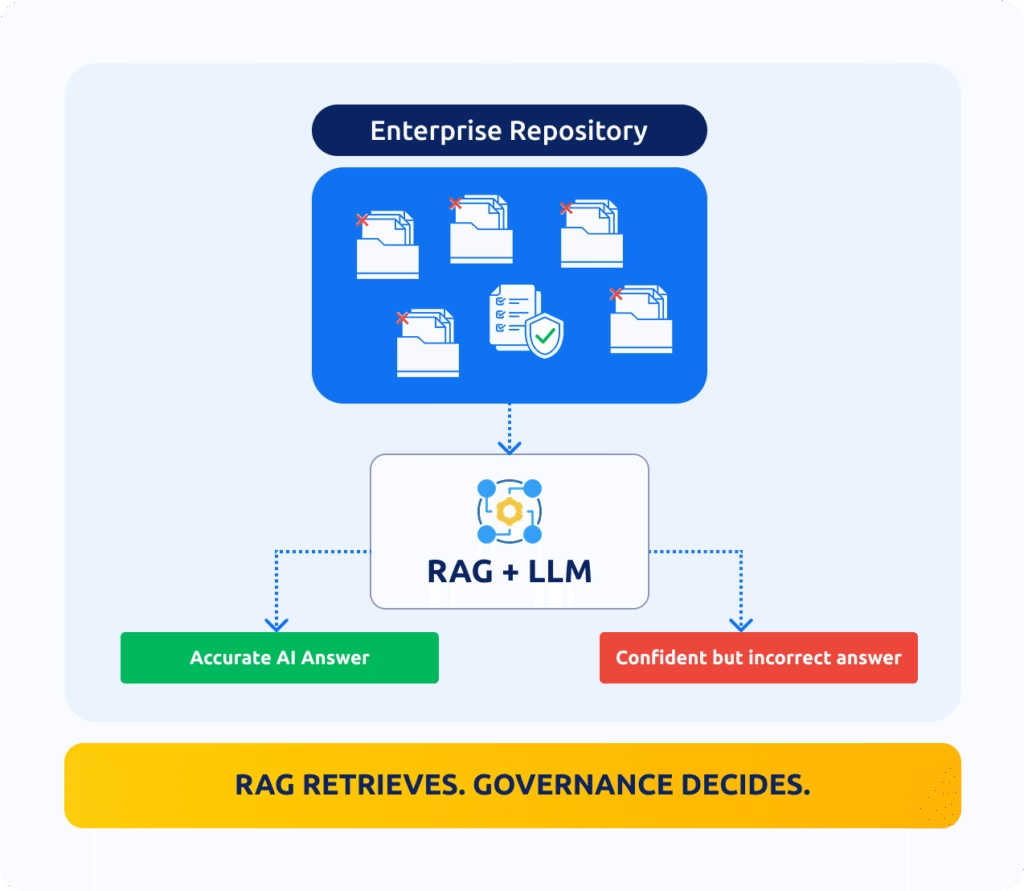
RAG improves retrieval. It does not fix information quality.
AODocs addresses the root cause: document governance.
“The more data you give your AI,
the better it will perform“
Giving your AI access to all enterprise data sources introduces noise, contradictions, obsolete versions, drafts, unapproved content and duplicate and conflicting documents.
The AI assumes everything you give it is legitimate, even when your repository is full of outdated or invalid documents.
Example: Give it a mix of draft policies and procedures, deprecated instructions, and the approved version, it will treat them all as equally correct.
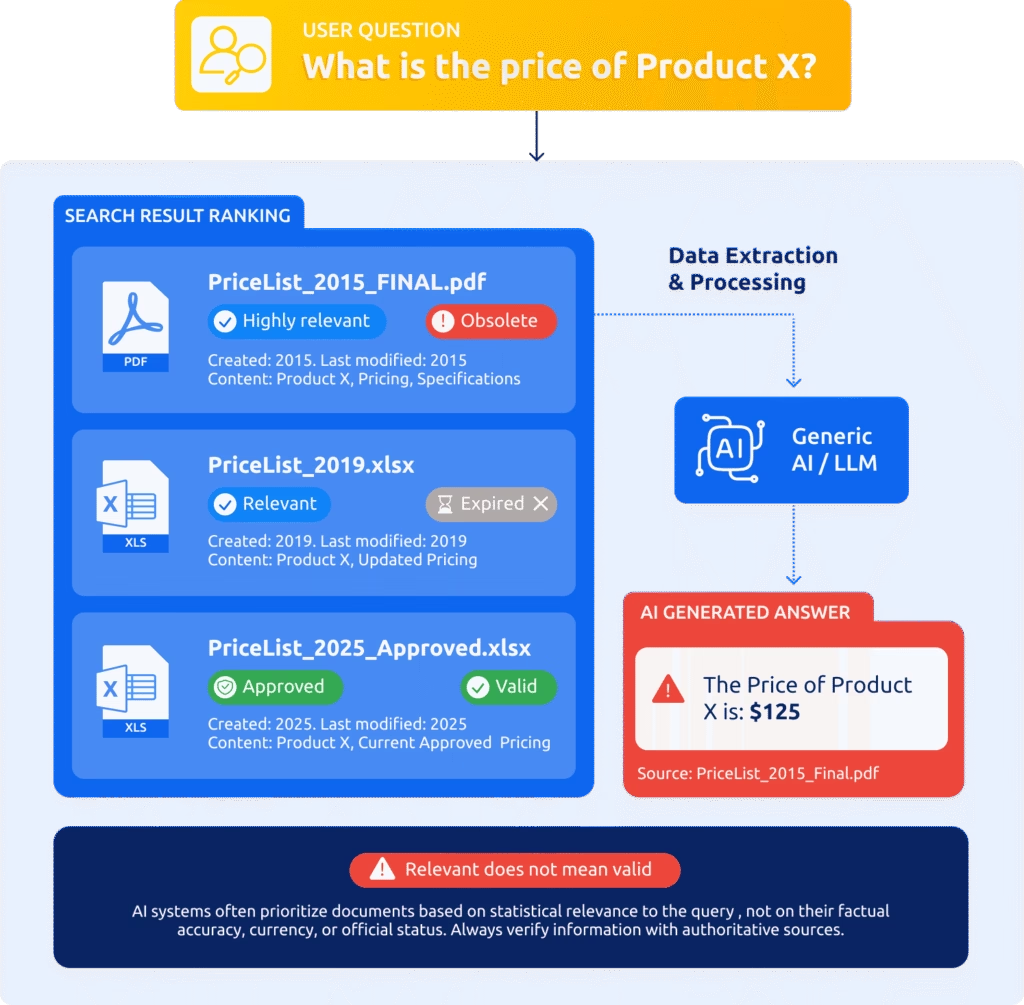
“AI is smart enough to figure out
what’s correct”
It isn’t. LLMs rank documents based on relevance to the question, not validity. Your 2015 price list, for example, is perfectly relevant to the question “What is the price of product X?”, and yet the relevant answer found in this document is completely wrong in 2025.
Without document governance, the AI will confidently generate answers that sound right, look legitimate, but are factually incorrect.
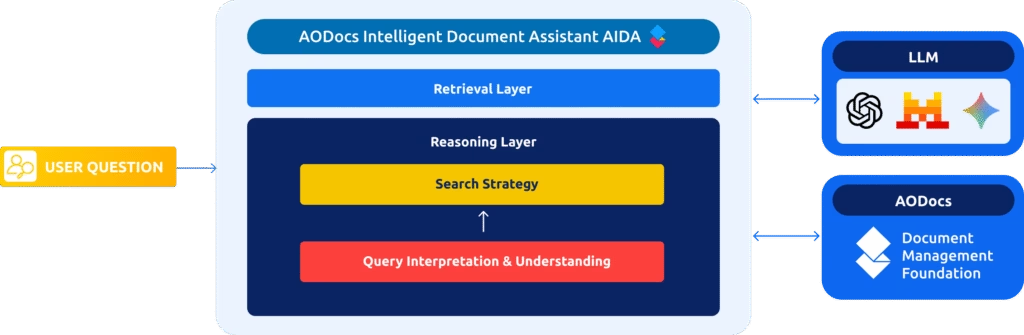
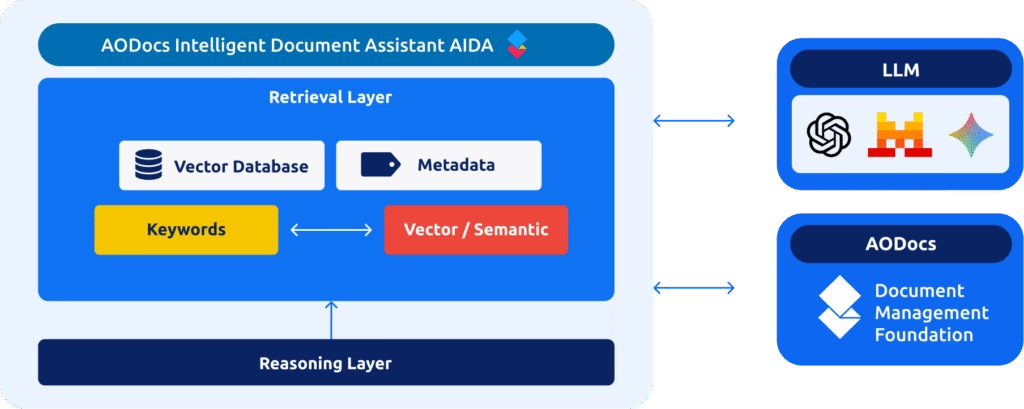
In the Reasoning Layer, AIDA – AODocs Intelligent Document Assistant:
Interprets the user intent and its context.
Determines the optimal search method: vector, metadata, or hybrid.
Leverage metadata validation status
Leverages metadata, validation status and version control to search only in relevant, validated documents.
The Retrieval Layer
In the Retrieval Layer, AIDA uses a hybrid search combining vectors, keywords, metadata, version history, approval status, and user permissions to select only authoritative and relevant sources.
A Reranker module then refines the results, aligning each document chunk with the actual question to ensure relevance and reliability.
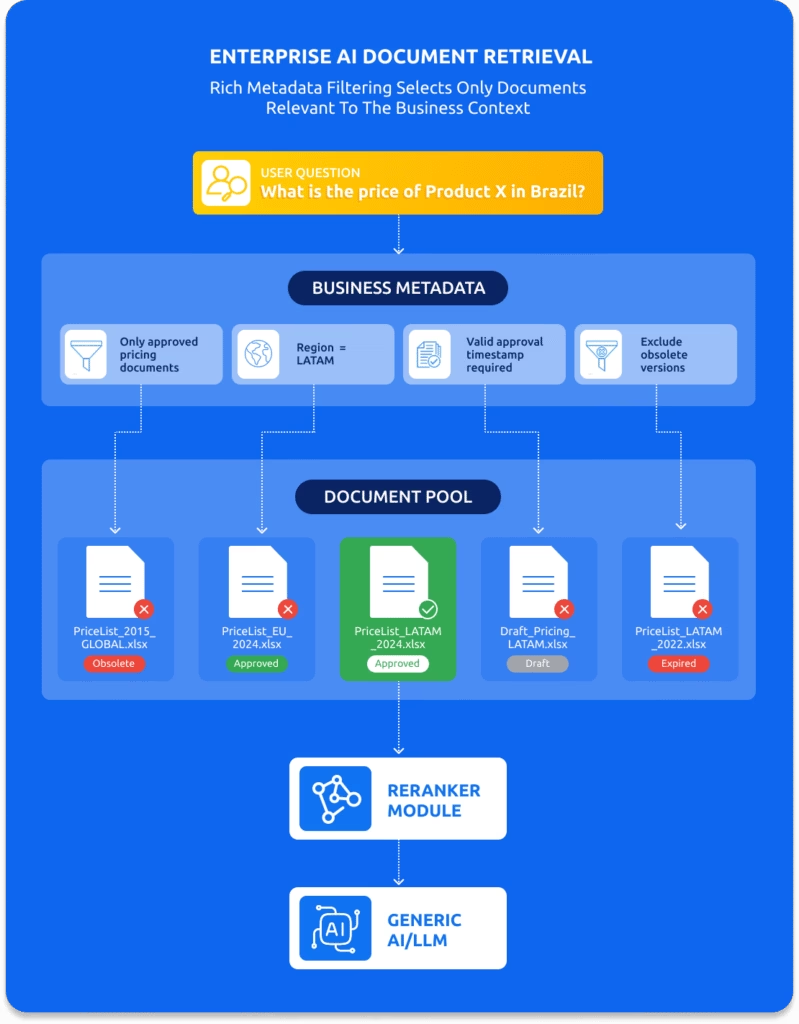
In the Retrieval Layer, AIDA executes the defined search strategy across the AODocs Document Foundation, applying metadata, version history, approval status, and user permissions.
Only valid and authoritative sources remain in the candidate set.
A Reranker module then refines the results, aligning each document chunk with the actual question to ensure relevance and reliability.
Define domain-specific constraints that guide retrieval.
Rules enforce metadata, approval status, version lineage, and conflict resolution before reranking occurs.
Approved pricing only
Valid approval timestamps required
Exclude outdated safety procedures
Keep only the most recent approved version
Domain knowledge becomes part of the search logic.
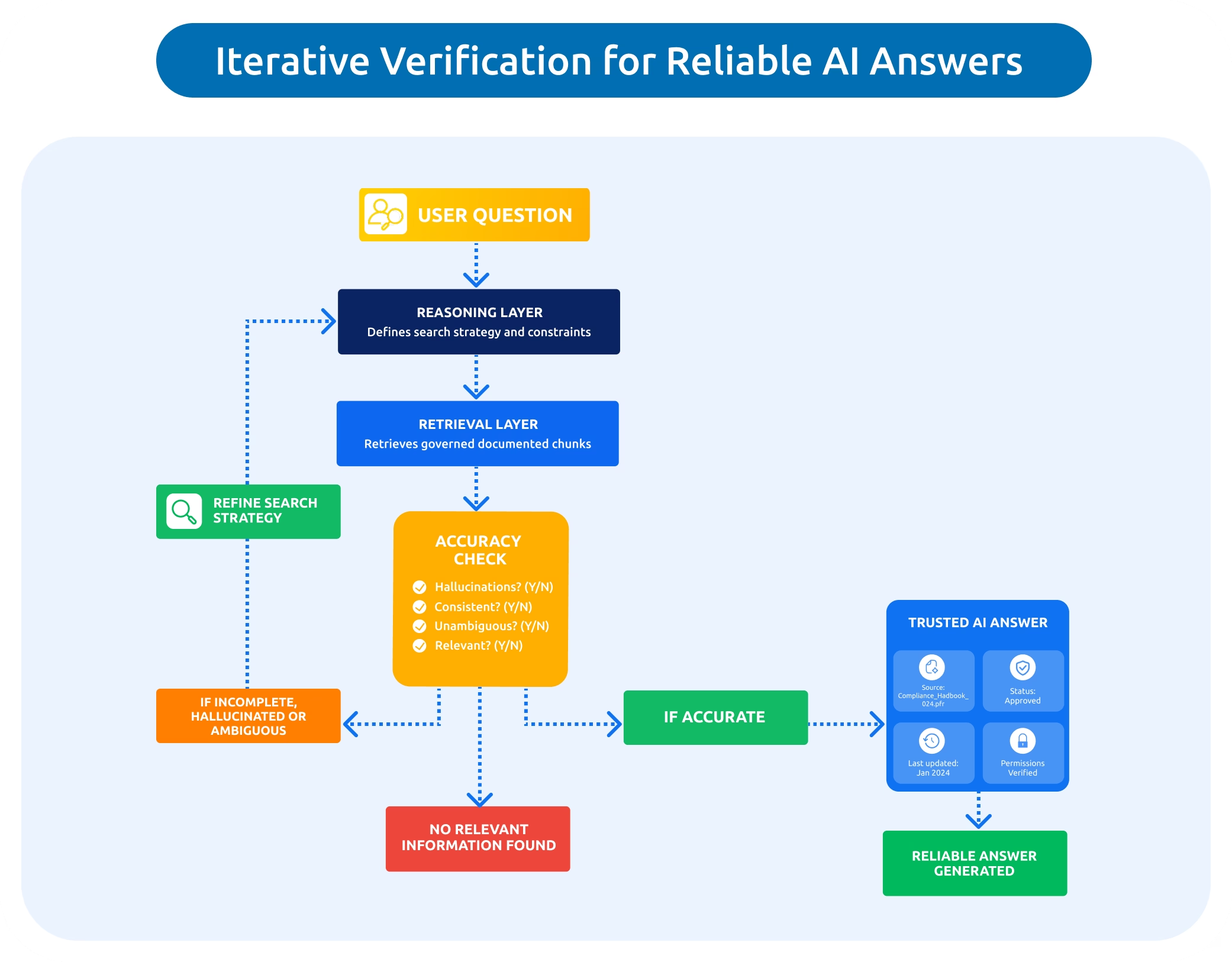
Once relevant document chunks are retrieved, the Reasoning Layer evaluates whether the information is hallucination-free, consistent, and accurate.
This iterative process – a structured chain of thought – continues until AIDA determines that:
A reliable and accurate answer has been found, or
The requested information does not exist in the document base
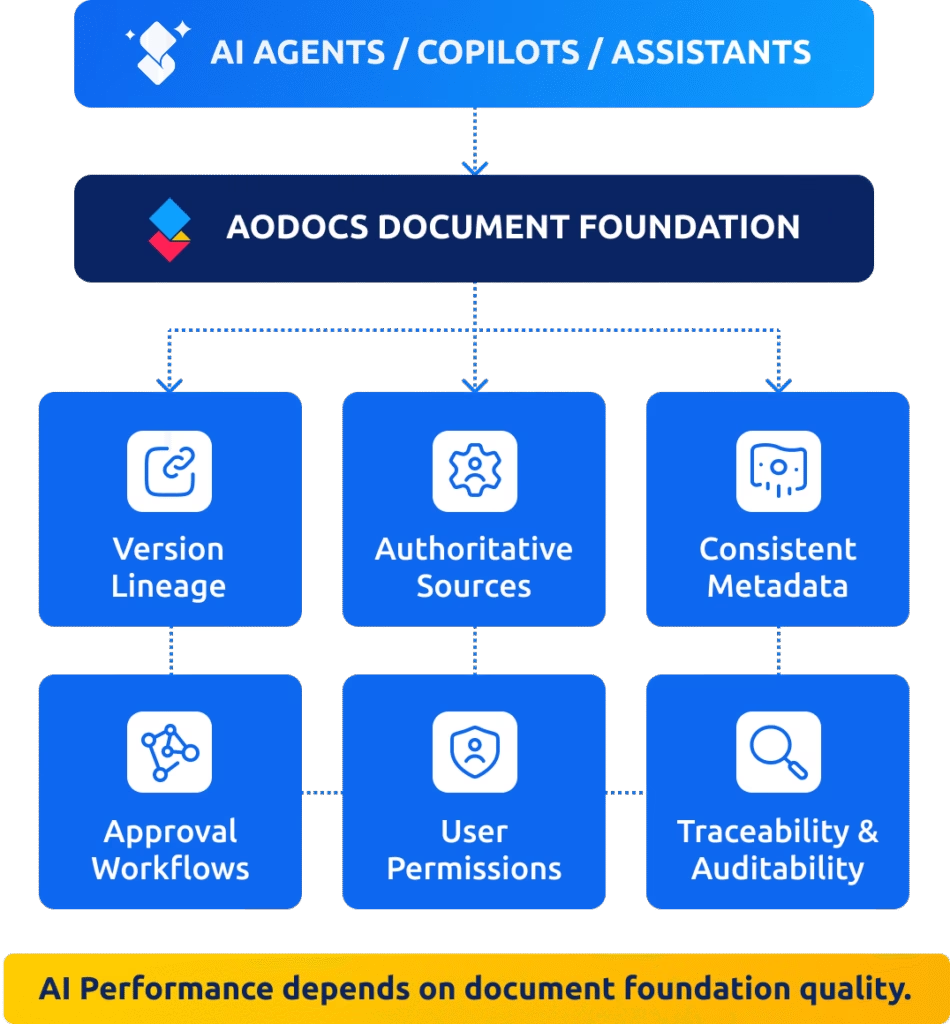
Reliable AI requires the same structured, governed environment that enables humans to work effectively:
Clear version lineage
Authoritative sources
Consistent metadata
Approval process
Access permissions
Traceability and auditability
This is how AI moves from experimentation to production.
AI projects often fail for reasons that have nothing to do with the model itself. They fail because of wrong assumptions about information quality.