
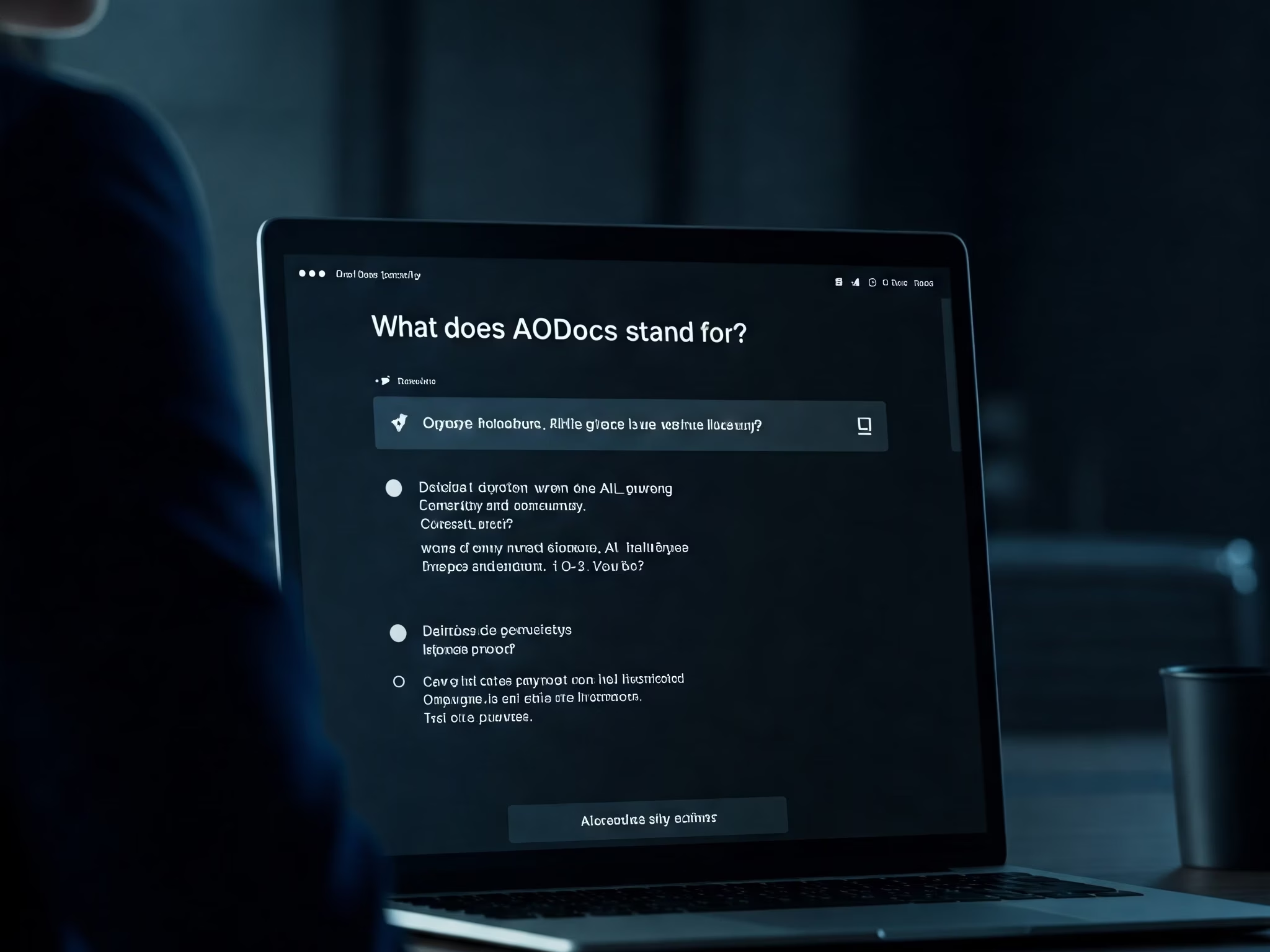
We asked a bunch of AI chatbots a straightforward question: “What does AODocs stand for?” The super-confident—and totally wrong—answers from the bots are more than just amusing. The misfires highlight a real issue: without access to accurate, controlled information, AI can deliver authoritative-sounding and inaccurate responses that mislead users, and potentially cost businesses.
The following examples serve as a cautionary tale about trust, data quality, and what it really takes to deploy LLMs safely and productively in the enterprise.
One thing you don’t need to worry about is a spoiler alert—we’ll reveal the real story behind the brand name at the end of this article.
What do chatbots get wrong when attempting to explain AODocs’ brand name?
If you ask a few popular AI chatbots what “AODocs” stands for, you’ll likely get a confident, authoritative answer. Unfortunately, those answers are also 100% wrong.
Take a look at the examples we gathered. One chatbot says AODocs stands for “Automated Organization Documents,” another calls it “Advanced Office Documents,” and a third offers “AI-Optimized Documents” as the origin.
Creative? Sure.
Accurate? Not even close.
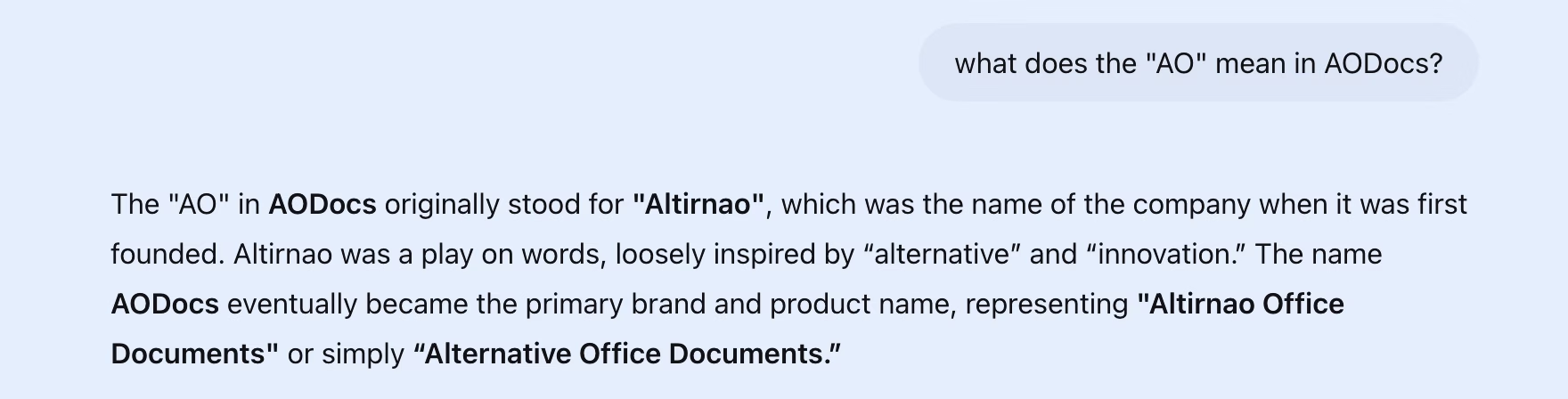
Where do these wrong answers come from?
Our analysis suggests they’re extrapolated from existing keywords and associations. Some language models pull from open forums, wiki-style entries, marketing jargon, or outdated internal glossaries.
In the absence of clear, verified data, they do what they’re designed to do: fill in the blanks in a plausible-sounding way.
But plausible isn’t the same as correct.
Plot twist: this isn’t the LLMs’ fault. It’s 100% ours. And it might be your problem, too, even if you’re unaware of it.
Why is this little example important?
Across industries, companies are racing to integrate AI-powered chatbots and assistants into their operations. The promise is real: AI can boost productivity, streamline workflows, and offer a competitive edge. But without controlling the quality of the data that feeds the bots, the results can be anything but funny.
Chatbots such ChatGPT, Gemini, Perplexity, Claude, Grok or Mistral excel at delivering answers in natural language. What they don’t do well is differentiate between correct and outdated—or outright wrong—information. According to a study from the Tow Center for Digital Journalism, LLM chatbots like ChatGPT, Gemini, Perplexity, or Claude were confidently wrong over 60% of the time when citing information.
Worse, they rarely admitted uncertainty.
Imagine that happening inside your company. A sales rep asks an AI assistant for “product pricing” and gets an outdated promotional rate from 2022. A compliance officer looks up an HR policy and gets the wrong, old version.
In these cases, AI isn’t fixing your knowledge problem—it’s compounding it.
The root cause? Chatbots pull from everywhere and anything: unstructured files, old emails, unused folders, even expired SharePoint links.
Without strong governance, enterprise bots might become cocky engines of chaos.
What’s the potential risk to your business?
You’re not only risking inefficiency. There’s also the issue of exposure. Misconfigured AI chatbots have leaked sensitive information. The so-called “ConfusedPilot” vulnerability showed how easily employees could stumble via chat upon private CEO emails or confidential HR files.
That’s the real pitfall in this rush to deploy AI on enterprise content: you could find yourself trapped in a minefield of wrong data.
The only way out?
Give AI the right map—starting with controlled, validated documents.
Then how should you deploy AI on document repositories?
Start small and scale smart. Here’s the roadmap:
- Start with Trusted Content: Begin AI deployments with structured, validated knowledge bases—like approved manuals, official templates, or sales enablement tools.
- Govern with Metadata: Tag documents clearly: “Valid,” “Draft,” “Obsolete.” Ensure AI can understand and respect these signals.
- Pilot Carefully: Deploy in a focused use case—like answering HR policy questions or surfacing customer FAQs—before going enterprise-wide.
- Monitor & Iterate: Establish feedback loops. Flag wrong answers. Improve the underlying data.
Organizations that get this right turn AI from a risky experiment into a scalable advantage.
What can be the most effective solution for safe, accurate and productive AI?
Trustworthy AI requires a trustworthy foundation. That’s where third-generation DMS platforms like AODocs—and its AI Assistant, AIDA—comes in.
AIDA connects to your company’s approved document repositories and only pulls from validated, secure, and up-to-date content. Whether you’re analyzing supplier contracts, translating marketing materials, or summarizing financial reports, AIDA gives you fast, reliable answers—with zero guesswork.
Here’s the framework:
- Instant, Trusted Answers: Grounded in your enterprise’s latest SOPs, policies, and legal docs.
- Secure by Design: Compatible with your company’s preferred LLMs, API gateways, private networks, and access permissions.
- Ready in Minutes: Deploy in record time and see value fast.
Effective AI starts with controlled data. New generation DMS such as AODocs provides the structure, security, and scale to make it work.
Ok, let’s have the accurate and real source of the name: What does the AO in AODocs’ brand name actually mean?
Here’s the real origin story of the brand name ‘AODocs’, the one that we failed to feed the chatbots with:
AO is the Māori god of light and cloud. AODocs was born in the cloud, built to bring clarity and structure to the often-chaotic world of enterprise documents.
So no, AODocs is not “Advanced Office Docs.” It’s not about the office at all.
The AO in AODocs is about light. Clarity. And delivering the right information, at the right time, to the right people thanks to cloud-native technology.
That’s what a cloud-native DMS delivers. And even more so when it’s powered by AI tools that access only the right information, correct files and validated data.
That’s the real AODocs.
Are you hearing us, bots?
Discover how to deploy reliable and productive enterprise AI chatbots with AODocs.